Block Paving vs. Resin Driveways: Which Should You Choose?
- Ethan Low

- Sep 3, 2025
- 3 min read
Updated: Sep 3, 2025
When it comes to upgrading your driveway, two of the most popular choices are block paving vs resin driveways. Both look attractive, add value to your property, and come with their own benefits and drawbacks. But how do you decide which one is right for you?
In this guide, we’ll compare block paving and resin driveways side by side. We’ll look at costs, durability, maintenance, and overall appearance so you can make the best choice for your home.
What is Block Paving?
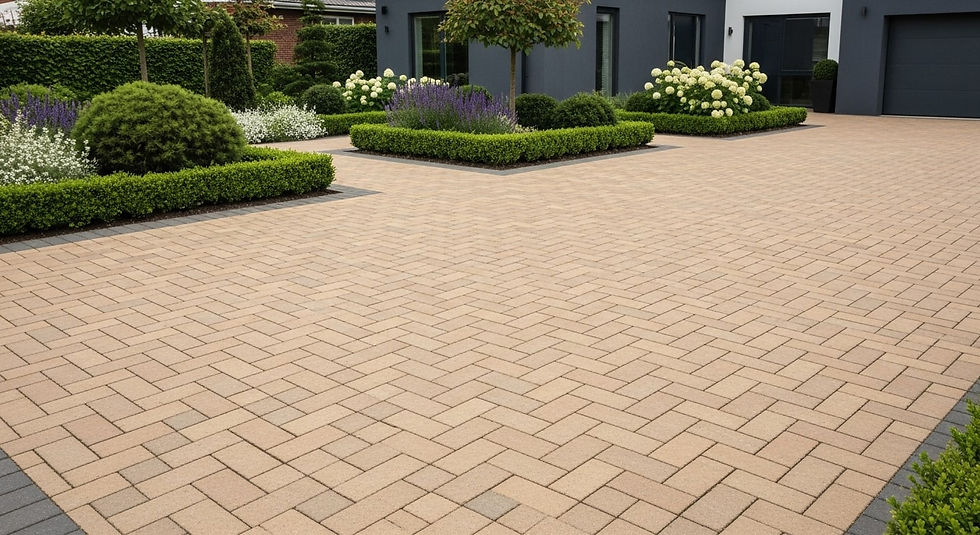
Block paving is made from individual bricks or blocks, usually laid on a sand and stone base. These blocks can be arranged in many different patterns such as herringbone, basketweave, or stretcher bond. Because of the wide choice of colours, shapes, and styles, block paving is very versatile.
It’s a tried-and-tested driveway material that has been around for decades. One of the biggest advantages of block paving is that if a section becomes damaged or stained, you can simply replace the affected blocks without redoing the whole driveway.
What is a Resin Driveway?

Resin driveways are created by mixing resin with natural aggregates like stone or gravel. The mixture is then spread over a prepared base to form a smooth, durable surface.
There are two main types:
Resin bound driveways – aggregates are mixed with resin and laid together, creating a smooth, permeable surface.
Resin bonded driveways – resin is spread first and loose stones are scattered on top, giving a more textured finish.
Resin driveways are modern, sleek, and low maintenance. They’re also permeable, which means water drains through the surface rather than pooling.
Block Paving: Pros and Cons
Advantages of Block Paving
Design flexibility – huge range of patterns, colours, and shapes.
Easy repairs – individual blocks can be lifted and replaced.
Durable – can handle heavy loads if installed on a strong base.
Long lifespan – with good maintenance, block paving can last 20+ years.
Disadvantages of Block Paving
Maintenance –weeds can grow between blocks if joints aren’t refilled with sand. Learn how to avoid this in Block Paving Maintenance.
Higher cost of labour – takes longer to install than resin.
Prone to sinking – if the sub-base isn’t properly compacted, blocks can dip over time.
Resin Driveways: Pros and Cons
Advantages of Resin Driveways
Low maintenance – no weeds or moss between gaps.
Modern look – smooth, seamless finish with a wide choice of aggregate colours.
Permeable surface – helps prevent puddles and flooding.
Fast installation – can often be completed in 1–2 days.
Slip resistant – good for safety in wet weather.
Disadvantages of Resin Driveways
Not as easy to repair – if damaged, you usually need to resurface a large section.
UV sensitivity – cheaper resins can fade or discolour in sunlight.
Cost – high-quality resin bound driveways can be more expensive than standard block paving.
Surface prep is vital – if the base isn’t perfect, cracks may appear.
Cost Comparison: Block Paving vs Resin
Block paving cost: Usually between £70–£100 per square metre, depending on the design and materials. Complex patterns and premium blocks will increase the price.
Resin driveway cost: On average £90–£120 per square metre. Resin bound is more expensive than resin bonded, but it lasts longer and looks better.
Prices depend on the size of the area, the condition of your current driveway, and local labour rates.
Durability and Lifespan
Block paving: Lasts 20–25 years with good maintenance. Joints need topping up with sand regularly, and occasional cleaning prevents weed growth.
Resin driveways: Lasts around 15–20 years if installed with quality materials. Cheaper resin may crack sooner, but premium UV-stable resin offers excellent durability.
Maintenance
Block paving maintenance: Requires brushing, re-sanding joints, and sealing every few years to protect against weeds and stains.
Resin driveway maintenance: Minimal. A quick sweep and occasional power wash is usually enough.
Which Looks Better?
Block paving offers traditional charm with a wide range of styles. It suits both classic and modern homes.
Resin driveways give a sleek, contemporary appearance. With over 20 aggregate colours available, you can match your driveway to your home’s style.
Ultimately, the “better” look comes down to personal taste.
Conclusion
If you want a classic look, easy repairs, and long-term durability, block paving is a strong choice. It may need more maintenance, but it can last decades with proper care.
If you prefer a modern, low-maintenance surface with fast installation, resin driveways are ideal. They cost a little more, but the smooth, seamless finish is hard to beat.
Your choice should depend on your budget, how much maintenance you’re willing to do, and the style that best suits your property. Both options add kerb appeal and value to your home — you can’t go wrong with either.


Comments